Neurox - AI Photo and Video Generation Bot for VK
A bot for a VK community that turns text and photos into images and video: 12 AI models in one chat, payments through YooKassa and an owner's panel with the revenue, cost and margin of every generation.
- Modes
- 4 modes
- Image from text, photo editing, video and photo sets
- Coverage
- 12 AI models
- Nano Banana, Seedream, GPT Image, Seedance and more
Problem
The idea: sell generations from top AI models right inside VK, with no website or app. The client had no technical background, and the bot had to take payments on its own, work with a dozen models and never sell a generation for less than it costs.
Result
The bot is live and taking payments: a user writes a prompt or sends a photo and gets the finished file back uncompressed. 12 image and video models run through one aggregator, and the owner's panel shows users, revenue, API cost and margin for any period.
Tech Stack
Overview
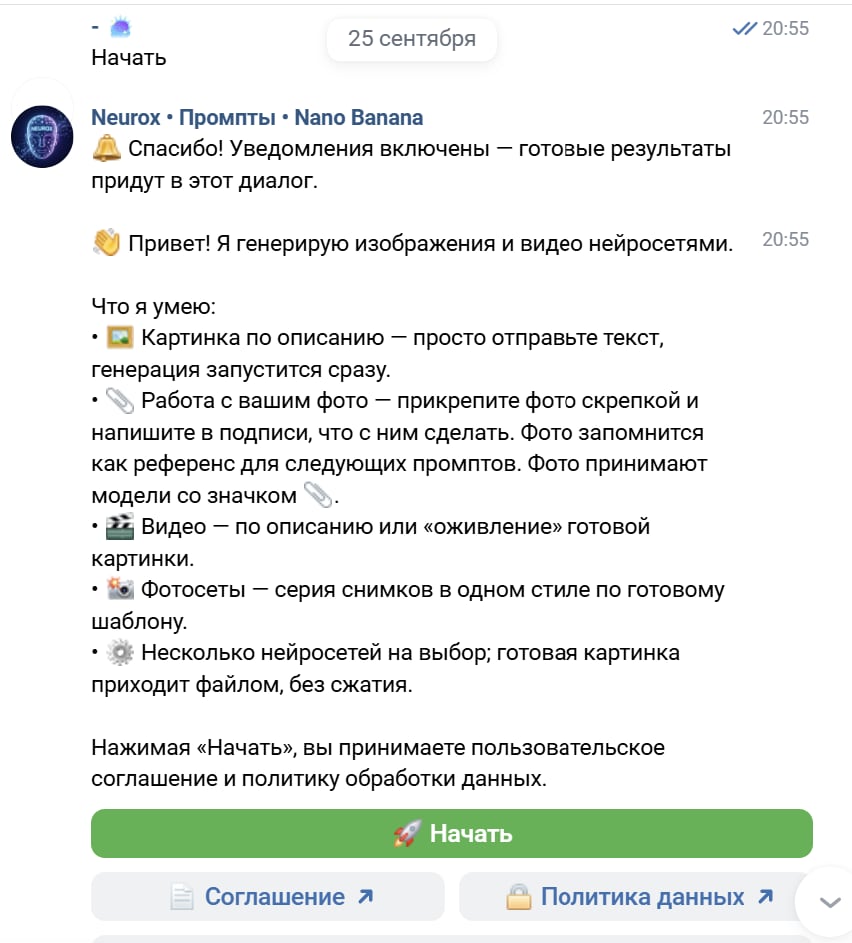
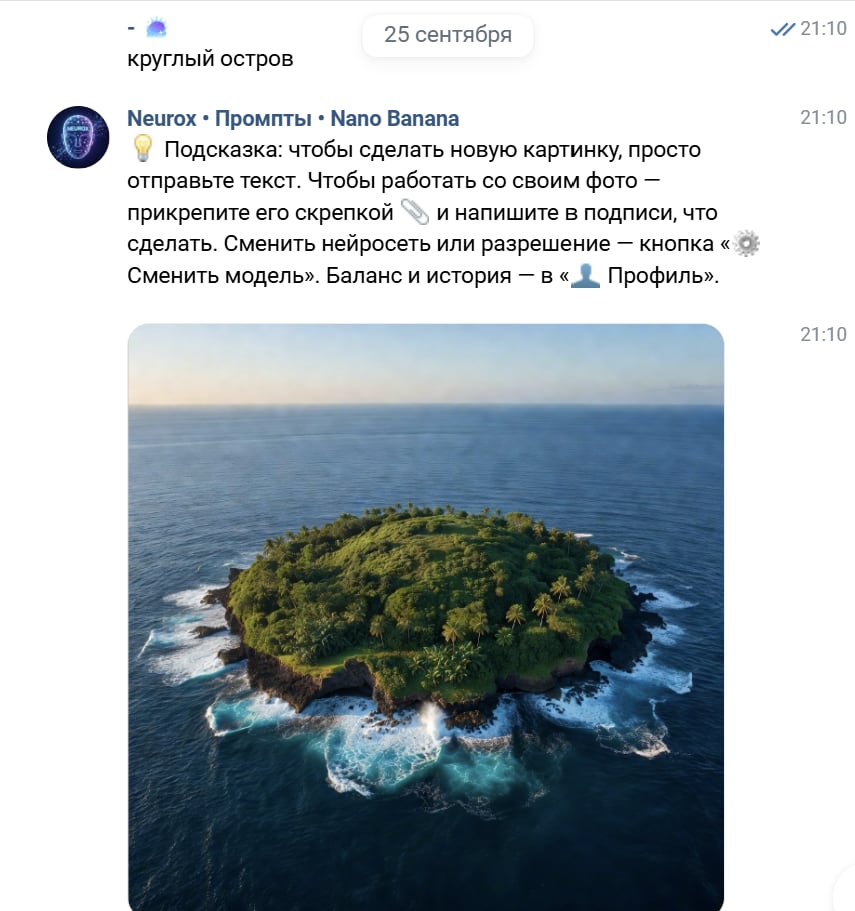
Neurox is a VK community bot that generates images and video with AI models. It all happens in the community’s direct messages: send text and get an image, attach a photo with a caption and get it edited, ask for a video and get a clip. No website, no app, no sign-up: the audience is already on VK, and the product meets it there.
The task came from the community owner, with an idea and no technical background. The review says so plainly: «I was a total zero on this topic». So I built the whole product: the bot, payments, the model connections and a panel where the owner can see how things are going and run the service without a developer.
Problem
Selling access to AI models inside VK is harder than it looks:
- There are many models, and they all differ. Each has its own API, prices and limits: some accept photos, some take text only, and video takes minutes to generate.
- Every generation costs money. Without tracking cost it is easy to sell at a loss and only find out from the provider’s bill.
- The owner needs numbers, not logs. How many people and how much money came in, what broke, who is waiting for an answer - all of it has to be visible without a developer.
- VK restricts communities. You may only message people who allowed it, and within limits, or the community risks restrictions.
Solution
The flow is simple and robust. A user’s message reaches the server from VK through the API. The bot checks which model and settings that user has chosen, reads the prompt and sends the job to an AI model aggregator. When the result is ready, the bot downloads it and sends it back to the same chat - as a file, uncompressed.
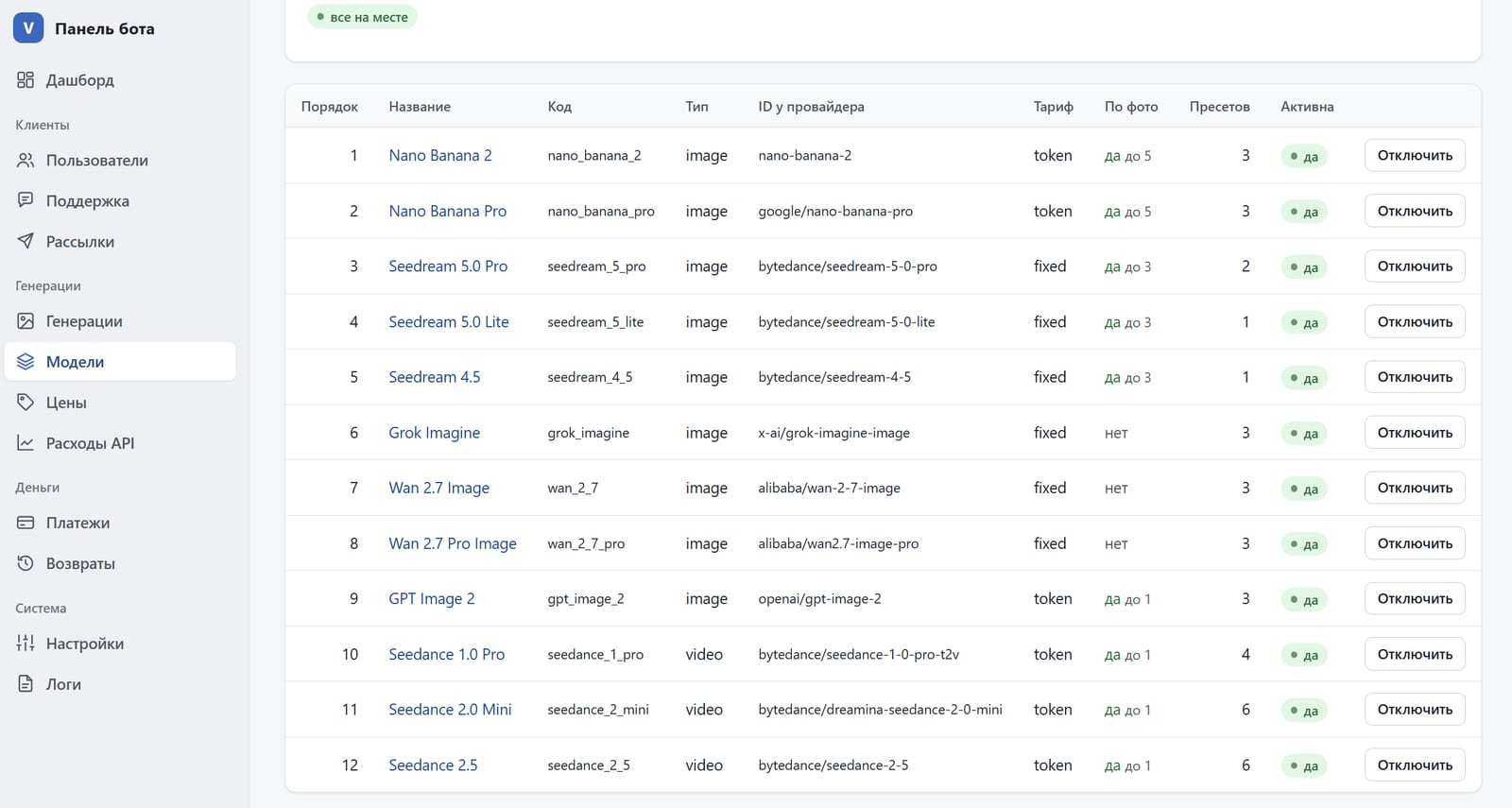
One aggregator instead of a dozen integrations. All 12 models run through a single API, so a new model is an entry in the catalogue rather than a week of development. Each model has its own pricing (per token or a fixed price), a limit on input photos and presets, and it is switched on or off with one button.
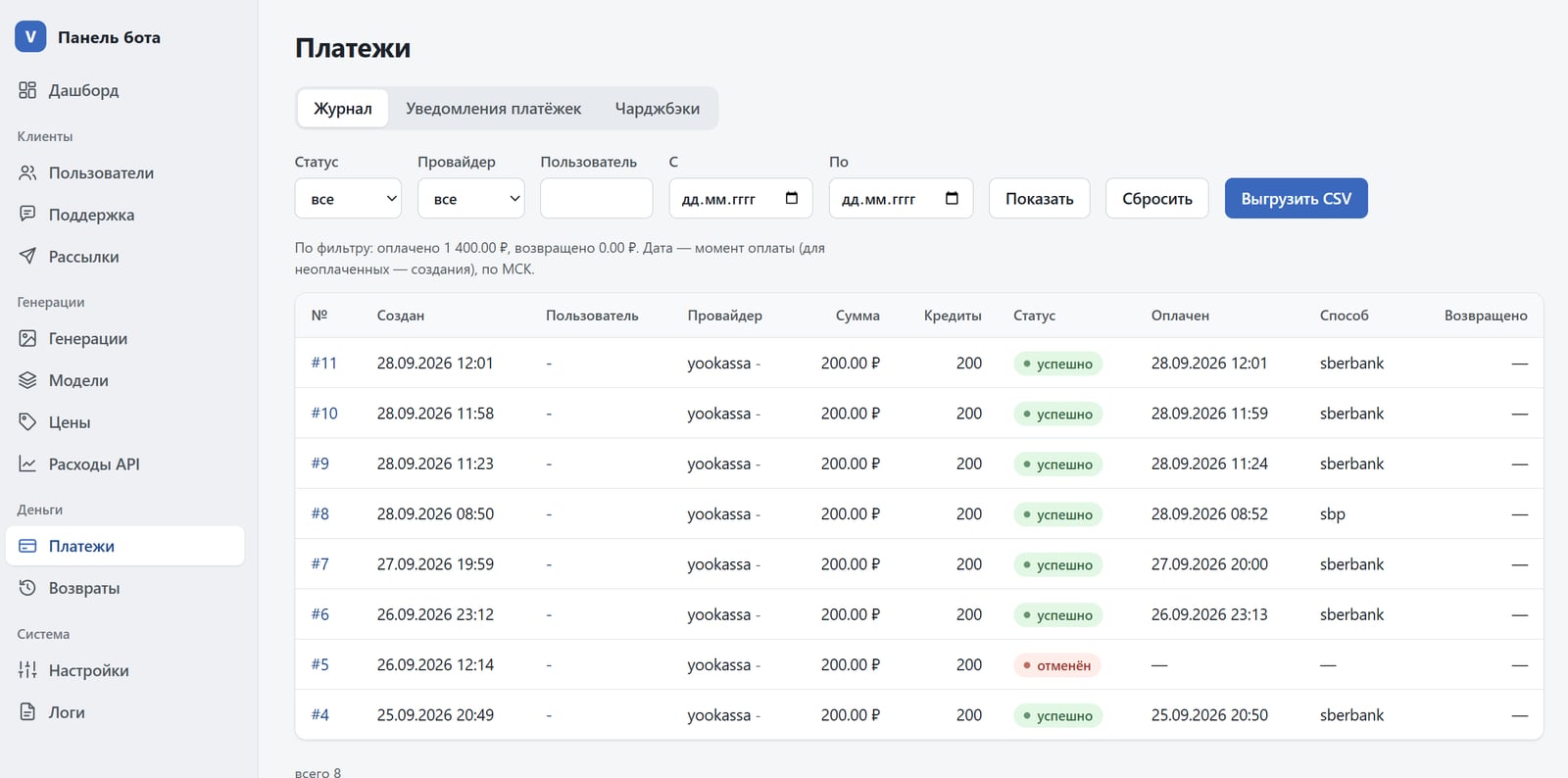
Credits instead of a subscription. Users top up their balance through YooKassa (SBP or SberPay) and spend credits on generations. The price depends on the model, so expensive models do not eat into the margin of cheap ones.
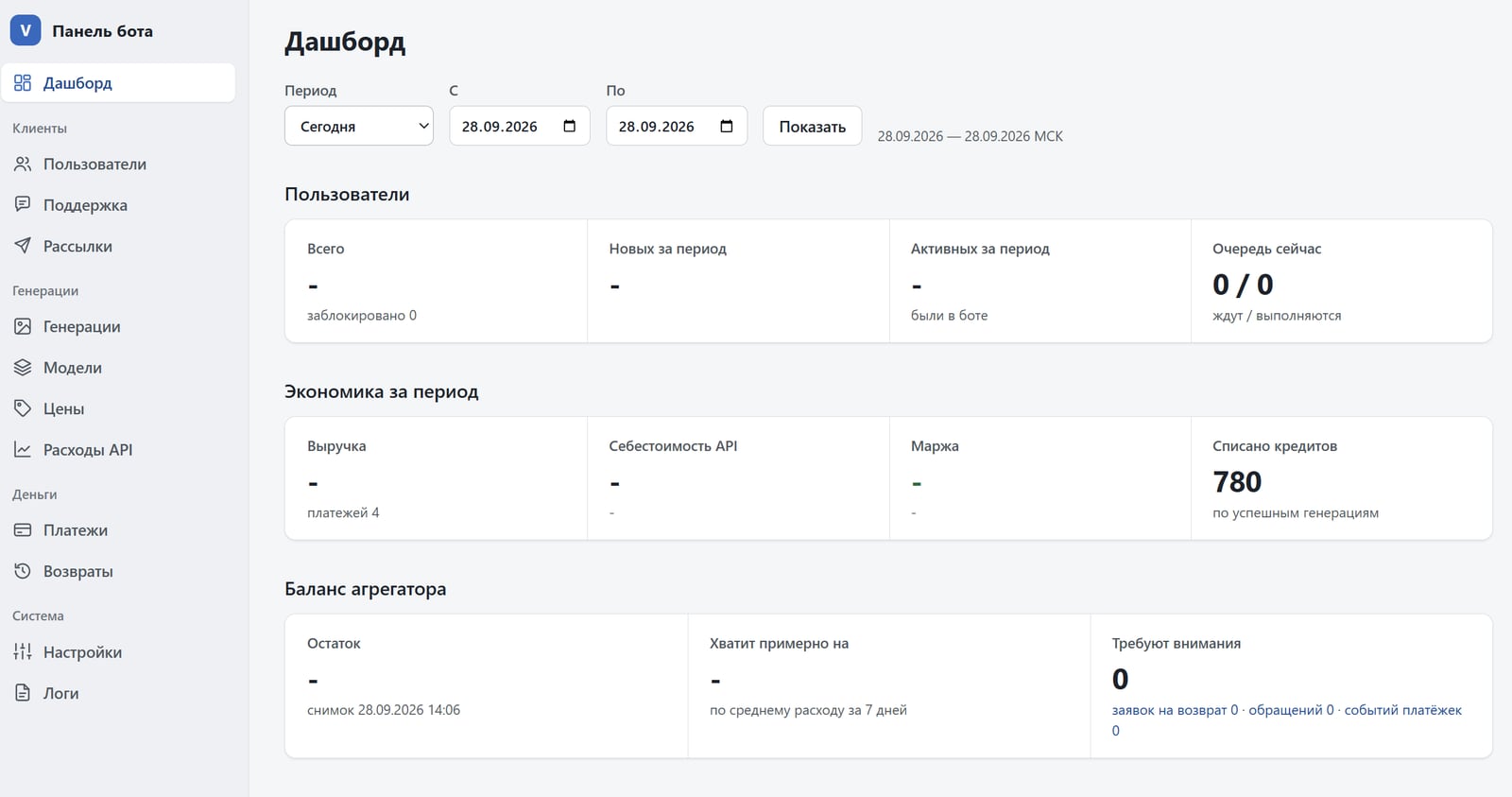
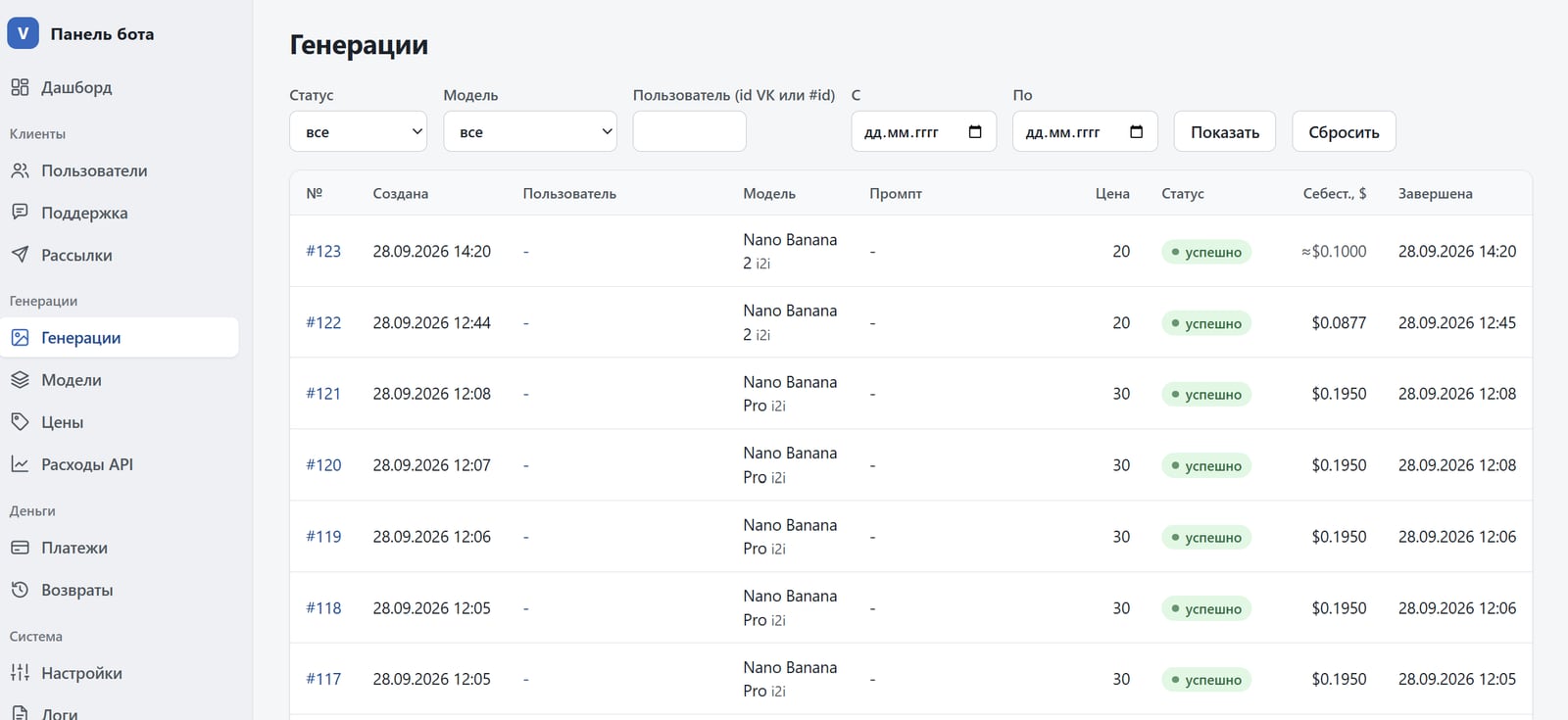
Cost in every record. Each generation stores what it actually cost at the provider, in dollars. The dashboard rolls that into revenue, API cost and margin for any period, and from the aggregator balance it shows how long the money will last at the average spend of the past week.
A generation queue. A worker runs the jobs, and the dashboard shows how many generations are waiting and how many are running right now. When a generation fails, the log shows why - most often the request broke the model’s own rules.
Features
- Four modes: an image from a description, work with your photo (it is kept as a reference for the next prompts), video from a description or by animating a finished image, and photo sets in one style from a template
- 12 models: Nano Banana 2 and Pro, Seedream 5.0 Pro, 5.0 Lite and 4.5, Grok Imagine, Wan 2.7 and 2.7 Pro, GPT Image 2, Seedance 1.0 Pro, 2.0 Mini and 2.5
- The finished image arrives as a file, without VK compression
- Switching the model and resolution with a button, with the balance and generation history in the profile
- Credits paid through YooKassa: a payment log, payment provider notifications, chargebacks and a CSV export
- An owner’s dashboard: users (total, new, active), the queue, revenue, API cost, margin and credits spent
- The aggregator balance with a forecast of how long it will last
- A generation log filtered by status, model, user and date
- A model catalogue: pricing, input photos, presets and a one-button switch
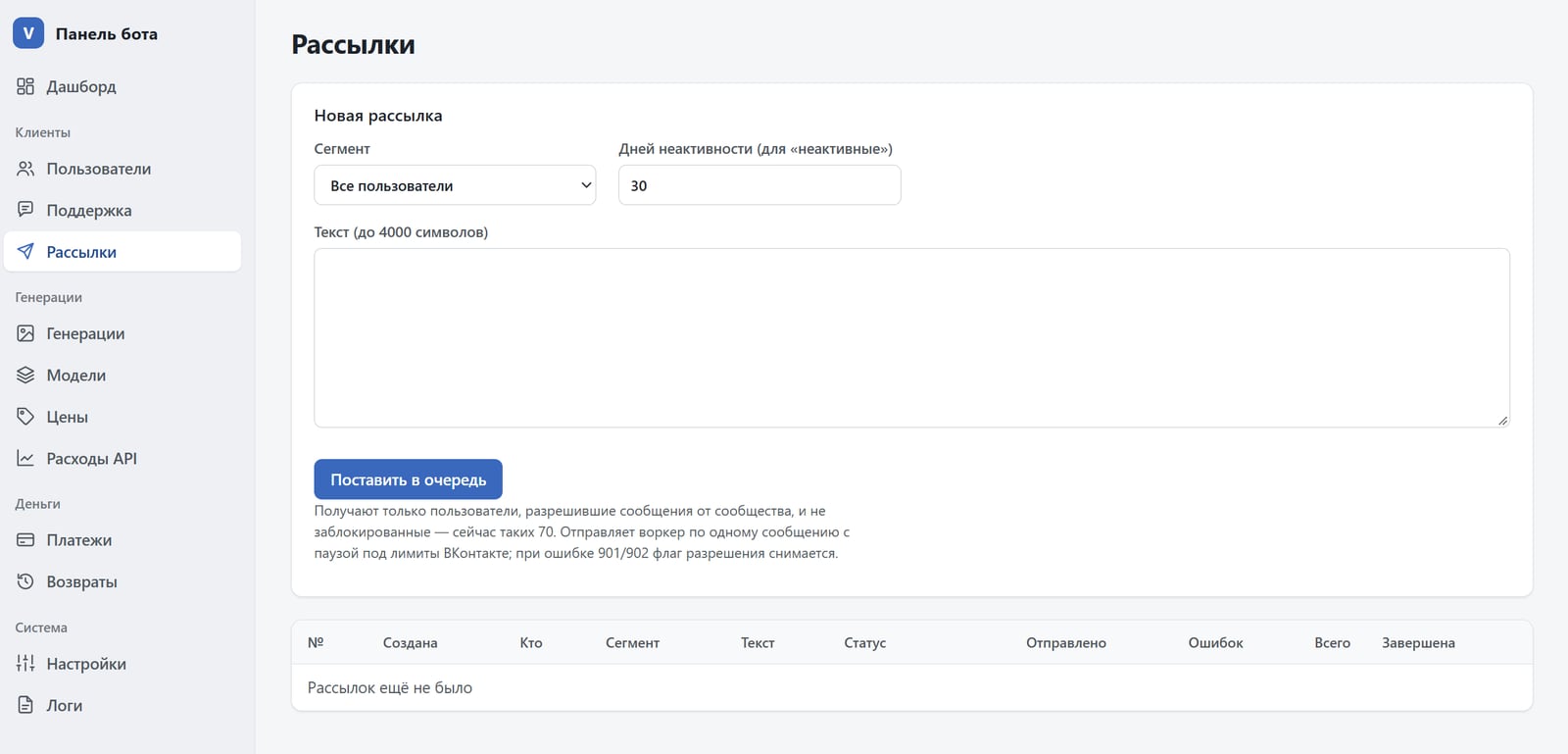
- Broadcasts to segments, including inactive users, within VK’s permissions and limits
- Support and refunds sections, plus a «Needs attention» block for refund requests, tickets and payment events
- Acceptance of the terms of use and the data policy at the start
Development Process
The project was built around a question that usually comes too late: how will the owner run the service once the developer is done? So the panel was designed alongside the bot, not after it.
Economics from day one. The provider’s cost of each generation is written into every record from the start. That way prices in credits follow the real cost, not a guess.
Broadcasts that do not hurt the community. VK only allows messages to people who opted in, and it watches the frequency. So the worker sends a broadcast one message at a time, pausing to stay within the platform’s limits, and when a user has blocked messages (errors 901 and 902), the permission flag is cleared automatically and that user is not messaged again.
Clear without a manual. The bot explains what it can do, hints at how to work with photos and switch models, and sends the result as a file in its original quality.
This order, by the way, went through the pipeline of my own client-finding system, LeadGen Outreach: from a proposal on Kwork to the «Won» stage.
Results
- The bot is live in the community and takes payments through YooKassa
- 12 AI models and 4 modes work in a single VK chat
- The economics are transparent: revenue, API cost and margin are visible for any period
- The owner runs models, broadcasts, payments and refunds from the panel, without a developer
- The project was delivered on the agreed schedule, and the client left a review (translated from Russian):
The task was to build a bot with neural networks for a VK community. Pavel is a great specialist in his field. He handled the task excellently, within the agreed time. He answered every question in detail and, most importantly, patiently, since some of them were probably a bit silly - I was a total zero on this topic. But thanks to Pavel I now know a little more. So I recommend him to everyone!
annakachur97, review on Kwork
What Was Learned
An AI product is more than a model call. Anyone can wire up generation today; what makes a product is the economics and the control: the cost in every record, a balance with a forecast, models that switch on with a button, and broadcasts that do not get the community banned.
The second lesson is about the platform. VK turned out to be a proper storefront for an AI service: the audience is already there, payment and delivery work right inside the chat, and users never have to leave. The same approach works for a Telegram bot - if you need a product like this, message me.
Services used in this project
Related case studies
- Astrogenerator - Horoscope Generation Telegram BotA tripwire bot for a practising astrologer: it writes the daily and the personal horoscope with ChatGPT, draws the lunar-day card itself, and warms subscribers up for one-to-one work.
- Telegram ChatGPT Poster - AI-driven autopostingA bot that writes posts through ChatGPT and publishes them to a Telegram channel, splitting the model's long answer into readable messages that stay inside the messenger's limits.